Third United Nations Conference on Landlocked Developing Countries (LLDC3) Concludes in Awaza with Landmark Commitments for the Next Decade

Wrapping up coverage of LLLDC3
Awaza, Turkmenistan – 8 August 2025 – The Third United Nations Conference on Landlocked Developing Countries (LLDC3) concluded today in Awaza, Turkmenistan, with the endorsement of the Awaza Programme of Action for LLDCs 2024–2034—a comprehensive 10-year roadmap to address the unique challenges of landlocked developing countries and accelerate their progress towards the Sustainable Development Goals (SDGs).
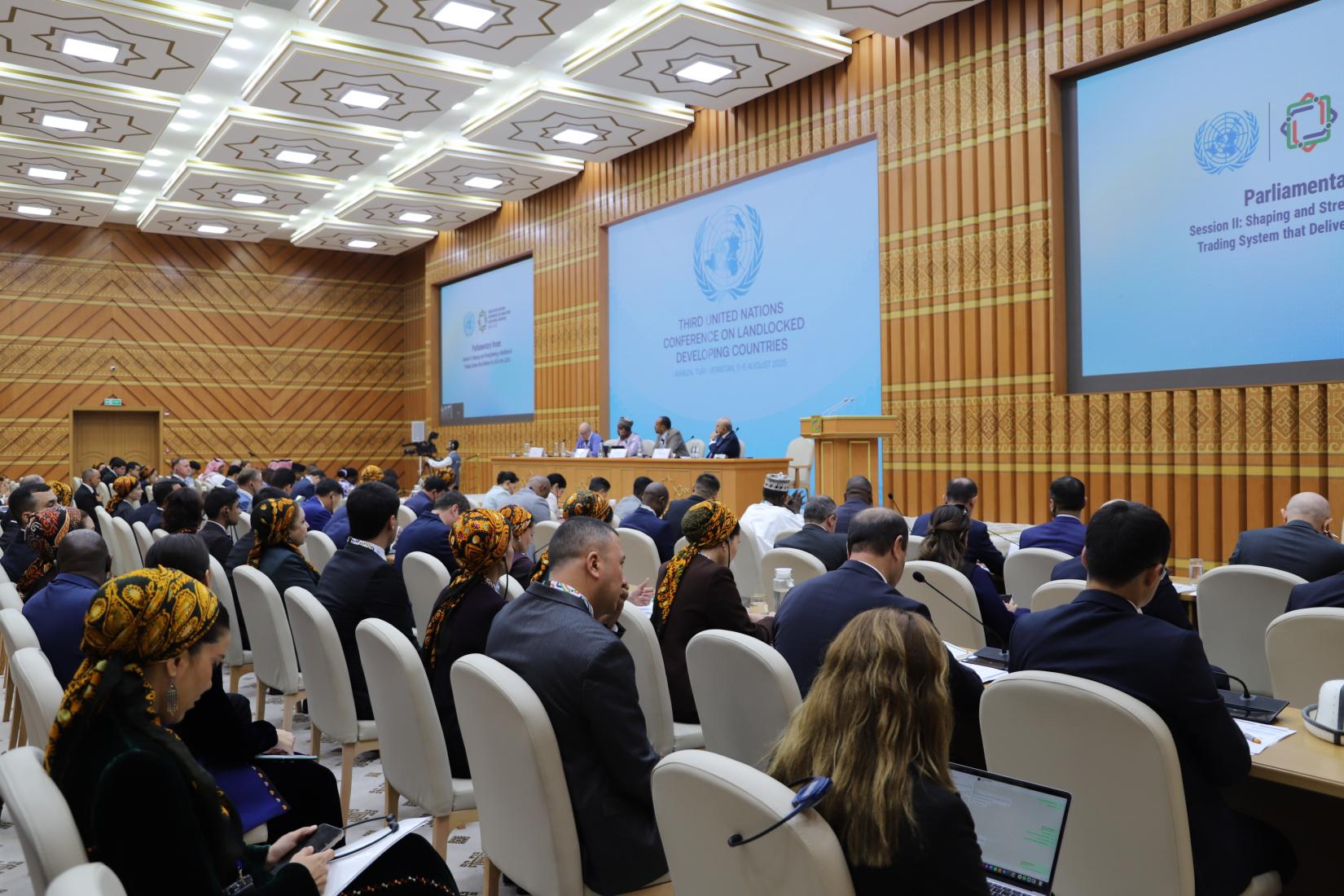
The four-day Conference brought together more than 5,700 participants from 103 countries, including representatives from 30 of the 32 LLDCs, 16 Heads of State and Government, 3 Vice Presidents, 108 ministers, over 100 parliamentarians, members from 29 international organizations, and more than 450 civil society organizations—making it the most comprehensive and inclusive gathering ever held for LLDCs.

Opening the Conference, United Nations Secretary-General António Guterres stressed that “geography should never define destiny,” urging the global community to remove structural barriers and mobilize greater investments in infrastructure, trade facilitation, and connectivity.

President Serdar Berdimuhamedov of Turkmenistan emphasized that LLDC3 sends a clear message: physical geography must not limit a nation’s potential. He reaffirmed Turkmenistan’s commitment to inclusive multilateralism and presented several initiatives, including the Medicine of the Future initiative, the Caspian Environmental Initiative, the Digital Atlas for Sustainable Transport Connectivity, and a Global Framework Programme on Circular Economy.

Voices from Across Sectors
From the Youth Forum on day one to multi-stakeholder platforms with women leaders, parliamentarians, civil society, the private sector, and South–South cooperation partners, LLDC3 ensured that diverse perspectives informed its outcomes. These forums produced actionable proposals to strengthen policy coherence, advance gender equality, invest in green infrastructure, and promote community-driven development.

Thematic Priorities
Discussions centred on the five strategic priorities of the Awaza Programme of Action:
- Structural transformation, diversification, and science, technology and innovation (STI)
- Trade, trade facilitation, and regional integration
- Transport and transit systems
- Climate resilience and environmental sustainability
- Access to finance, technology, and capacity building
A UN-co-hosted side event on the circular economy showcased how resource-efficient practices can create new economic opportunities and advance climate goals in LLDCs.

Flagship Initiatives
The Awaza Programme of Action introduces five flagship initiatives designed to address structural impediments and catalyse progress across the SDGs:
- Regional Agricultural Research Hubs: To boost food security, diversify exports, and promote climate-smart agriculture, enhancing resilience and nutrition.
- Dedicated Work Programme on LLDCs under the WTO: To address trade vulnerabilities, improve market access, and integrate LLDCs into global supply chains.
- Secretary-General’s High-Level Panel on Freedom of Transit: To remove transit barriers, improve infrastructure, and ensure LLDCs’ effective participation in global trade.
- Infrastructure Investment Finance Facility (IIFF): To mobilize resources for sustainable infrastructure, connect investors to opportunities, and strengthen local capacity to develop bankable projects.
- Digital Connectivity Initiatives: To bridge the digital divide and enable LLDCs to harness the power of digital infrastructure for trade, services, and innovation.

The Role of Resident Coordinators
Resident Coordinators (RCs) will play a central role in translating the Awaza Programme of Action into tangible results at the country level. Working in close partnership with National Focal Points, RCs can help integrate LLDC priorities into national development plans and UN Sustainable Development Cooperation Frameworks, ensure alignment with sectoral strategies, and identify practical entry points.
They can also work with governments and partners to mobilize financing for LLDC priorities, promote peer learning and regional cooperation, and ensure that SDG monitoring systems capture progress on Awaza commitments. The OHRLLS Toolkit will be an important resource, offering practical guidance on integrating the Programme of Action into national planning and follow-up processes.
“LLDC3 has shown us that the vision and political will are in place. Now it’s about implementation—and for that, the RC–NFP partnership is absolutely central,” said Dmitry Shlapachenko, UN Resident Coordinator in Turkmenistan. “With the right tools, partnerships, and sustained focus, we can turn commitments into concrete progress for landlocked developing countries.”

A Decade of Action
Speaking at the closing press conference, Rabab Fatima, Under-Secretary-General and High Representative for the Least Developed Countries, Landlocked Developing Countries and Small Island Developing States, and Secretary-General of LLDC3, remarked: “Awaza, a city associated with wellness and tourism, now symbolizes ‘new hope and new opportunities’ for landlocked developing countries.”
For UN Turkmenistan, LLDC3 was a defining moment to reaffirm support for the country’s role as a bridge for dialogue, cooperation, and partnership. The outcomes will guide a decade of action to transform LLDCs from landlocked to land-linked, ensuring that no country is left behind because of its geography.



UN entities involved in this initiative
Goals we are supporting through this initiative